Airtel Payments Bank said over 10,000 customers have opened savings accounts with it within two days of going live with a pilot project in Rajasthan.
Majority of these accounts have been opened by customers in semi-urban and rural areas, underlining the potential for growth of banking services in such areas, Airtel Payments Banksaid in a statement.
Last week, Airtel Payments Bank became the first Payments Bank to go live in the country with the roll out of pilot services in Rajasthan.
"We are offering the highest interest rate on savings account deposits in the country along with personal insurance of Rs 1 lakh and may look at sweetening the value proposition further and introduce more benefits in the coming days to accelerate the onboarding," Shashi Arora, MD and CEO, Airtel Payments Bank said.
In Rajasthan, Airtel Bank has rolled out pilot services across 10,000 Airtel retail outlets, which also act as banking points. Two-thirds of these banking points across Rajasthan are in rural areas. Airtel Bank plans to have a network of 100,000 merchants (shops) across Rajasthan by the end of the year.
All these merchants will accept digital payments via Airtel Bank using a mobile phone, the statement said adding Airtel will not charge any processing fee from merchants for this facility.
READ ALSOAirtel becomes first payments bank to go live
With the objective of deepening financial inclusion, RBI kicked off era of differentiated banking with SFB (small finance bank) and PB (payments bank), and 21 entities, including 11 for payments bank, were given in-principle nod last year.
Later, three entities -- Tech Mahindra, Cholamandalam Investment and Finance Company and a consortium of Dilip Shanghvi, IDFC Bank and Telenor Financial Services -- backed out of the payments bank licensing.
The digital and paperless Airtel Payments Bank has promised that account opening will be quick using Aadhaar based e-KYC. Customer's Airtel mobile number will be their bank account number.
The interest rate of 7.25% per annum will apply on deposits in savings accounts. Airtel Banking points will offer bank account opening services and cash deposit and withdrawal facilities.
As per RBI norms, payments bank will initially be restricted to holding a maximum balance of Rs 1 lakh per individual customer. source: gadgetshow
Can Big Data help track Black Money in the Indian market?
The Modi-led NDA government’s move to ban the circulation of old Rs 500 and Rs 1000 notes brought black money again into the spotlight. The ban is believed to bring down the stashing of cash, outside the banking system and ensuring transparency in the economy. It is easier said than done. However, the government can use more effective tools to fight corruption as well as black money. It can use new age tools such as big data and analytics.
The government has already put a lot of stress on Digital India which is centred around connecting all 600k villages over the high-speed fibre network. Since most of the transactions related to disbursement of subsidies/funds, land records, land deals and others would be done digitally, the government will have a fair chance to keep eye on everything.
The use of big data analytics in order to track transactions can give government insights into the financial malpractices in real time. The government will have to further the use of DBT (direct benefit transfer) and transfer all kinds of subsidies into the bank accounts opened either under the Jan Dhan Yojna (JDY) or otherwise. In many states, the government is already transferring the LPG and PDS subsidy into the bank accounts. Further enhancement of DBT will give the government an upperhand in its fight against corruption.
“With the financial backbone that can collect information on all the financial activities also in place, Big Data Analytics can be extremely effective. It can easily spot unusual activities at any level of aggregation: regional, branch or even at individual level. It is the right time to deploy Big Data Analytics to make this detection of unwanted financial activities faster, easier and more targeted,” suggests Himanshu Gupta, Director of Strategic Accounts, Fuzzy Logix.
The cash that remains out of the financial systems will start diminishing, but even this cash leaves a digital trail, either at the point of consumption or at the point of supply.
India is not the only economy which is facing a challenge to uncover the black money hoarders. According to a fresh estimate by a trio of senior economists from the Bank of Italy, from the $6-7 trillion worth of black wealth lying hidden in tax havens across the world, Indian’s share is estimated at $152-181 billion, which makes up a sizeable portion of Indian economy. For effective use of big data analytics, the successful implementation of Digital India in all government departments (States and the Center) including all the banks will have a far reaching impact.
Research conducted by cybersecurity firm Kaspersky Lab shows that the vast majority of people want to leave social networks, often because they are a waste of time.
According to the survey, people only stay on social media such as Facebook, Instagram etc. because they fear losing digital memories and contact with their friends.
Keeping in touch with friends may be a difficult problem to solve, but Kaspersky Lab is working on a solution to help people save their digital memories. An app called FFForget, will allow people to back up all of their memories from the social networks they use and keep them in a safe, encrypted memory container. The app is expected to give people the freedom to leave any network whenever they want, without losing out.
Previous research has highlighted a strong tendency for people to use digital devices as an external part of their memory. Studies have also demonstrated that people cannot resist checking their social media conversations and status updates on their phones. However, this latest survey indicates that users are actually self-critical and aware of their fixation – 39% of respondents said they believe they are wasting time on social networks. Nearly 78% even stated that they have already considered leaving social networks behind them.
Despite an inclination to leave their social networks, people are compelled to stay. A vast majority (62 %) believe they would lose contact with their friends if they left social networks. 21 per cent of respondents were less worried about their friends, but were afraid they would not be able to recover their digital memories – such as photos – once they had left a social network.
“Social networks can be a benefit or a hazard. If they are a benefit, it’s not our problem. We believe that every person has a right to freely decide which platforms to use or to leave at all times. True digital freedom is not a matter of having to make sacrifices. We want people to get back in the driving seat by being able to own an encrypted copy of all their digital memories at all times”, says Evgeny Chereshnev, Head of Social Media at Kaspersky Lab. “With Forget we want to create a solution which keeps people from being afraid of losing their memories to account damage or hacking attacks. And most importantly – people using the app would win back their right to quit any social network at any time without losing what belongs to them – their digital lives.”
Forget is planned for 2017. Interested users can register at forget.kaspersky.com to give feedback and influence the scope of the app. They will also get updates, insights and early access to the public beta when it will be available.
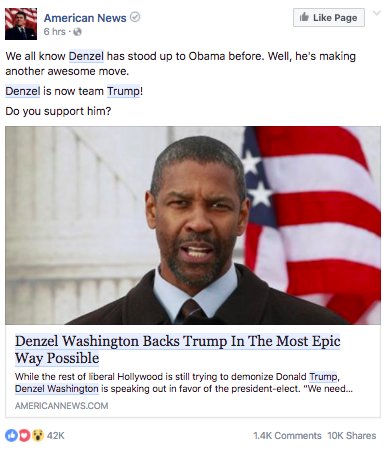
While it would have been nice to tackle this issue before the election, Google and Facebook are finally taking a tiny step in order to fight back against fake news. According to multiple statements, both companies have updated their policies to ban fake news sites from using Facebook’s and Google’s advertising networks.
With the U.S. election, fake news became incredibly popular on social networks, such as Facebook, Twitter and YouTube, as well as news aggregating services, such as Google News and news articles in Google search results. We’re not talking about opinion articles — we’re talking about reports spreading blatantly inaccurate information.
Google first updated its policy saying that the company will try to ban sites that “misrepresent, misstate, or conceal information.” Websites who don’t comply with this rule will get banned from using Google AdSense.
When it comes to Facebook, the company has also updated its policy to rule out fake news sites from using Facebook Audience Network.
Google AdSense and Facebook Audience Network let content publishers display ads on their websites. Google and Facebook manage the ad inventories, content publishers get a cut for clicks or impressions.
Both companies already have strict policies for their ad networks. For instance, you can’t use Google AdSense on a porn website. Google uses a combination of algorithms and human moderation to decide whether a site is eligible to use its advertising service.
By removing a potential revenue stream, it makes the business of fake news a bit less lucrative. For instance, Buzzfeed discovered that more than 100 fake news sites were created in a tiny city in Macedonia. So it’s clear that it’s not just about influencing the election — people are taking advantage of social networks to make money using fake news.
But there will always be alternative revenue streams, so this move is not enough. Reducing the reach of these websites is the best way to prevent fake news sites from popping out. If Facebook, Twitter, Google News and other websites flagged fake news appropriately, then there would be no reason to create fake news sites in the first place.
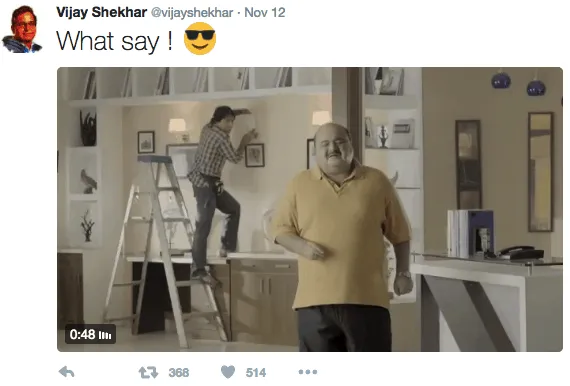
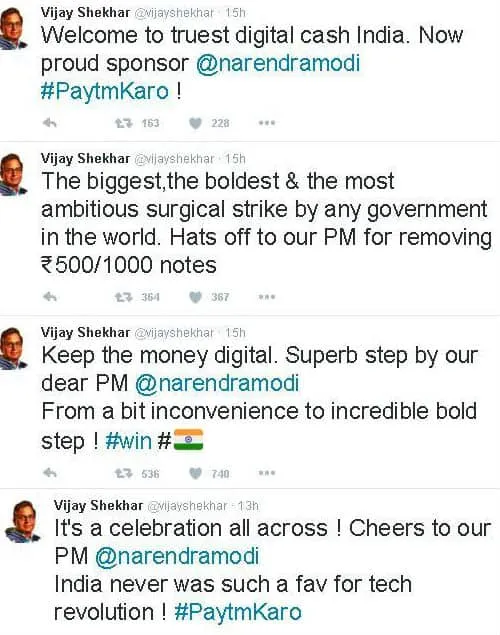
The latest advertisement by Paytm which urges people to use their wallet service is nothing but a mockery of the Indian economic system. According to the advertisement, the domestic help is more conscious than the middle-class woman. I am wondering why brands get out of touch with the reality. We all know that demonetisation is hurting the common people and not the rich who have access to credit and debit cards. Also, unlike the common man this class purchases from high-end supermarkets and not the neighboring grocery shop. We don’t have a clear picture of how many small shopkeepers have access to Paytm wallet and accept money through that medium.
Social media marketing rests on driving mileage by hitting the right keynote which the public wants to hear. At times, the strategy hits the bullseye while sometimes it generates negative publicity. Ironically, in the Paytm case, the harsh reality of the Indian economic system has been twisted and misinterpreted to accommodate the advertisers’ message.
Twitter
Paytm karo
I am certainly not against the cashless system but such arrangement takes some time to settle itself amidst the masses. According to the World Bank, only 50 percent of the world’s population aged 15 years or older have an account at a formal financial institution and the majority of the “unbanked” live in developing countries.
Cash Vs cashless transaction
According to a RBI report published in March this year and entitled Concept Paper on Card Acceptance Infrastructure, ATM withdrawals account for 90 percent of the total volume of debit cards transactions and approximately 95 percent of the total value. Between October 2013 and October 2015, the number of POS terminals increased by 28 percent whereas the number of ATMs grew by around 43 percent.
Numerous consumer payment surveys have shown that cash is widely used for low-value transactions. According to Guillaume Lepecq, CEO, AGIS Consulting, “In the U.S., according to the 2015 Diary of Consumer Payment Choice, cash continues to be the most often used consumer payment instrument and dominates small-value transactions.”
“In 2015, 32 percent of consumer transactions were made with cash, compared with 40 percent in 2012. Growing consumer comfort with payment cards and the growth of online commerce, among other factors, has contributed to this trend. However, a broad range of results suggests that cash remains resilient and continues to play a key and unique role for consumers,” he added.
According to the same report, 90 percent of cash transactions were made for buying food and personal care supplies, auto and vehicle-related, general merchandise, and gifts and transfers to people.
Who drives the cashless agenda?
The drive towards cashless economies is driven by commercial banks and private payment service providers rather than governments or central banks. In Sweden, for example, the exercise has been driven by the two major commercial banks, which are closing down ATMs and denying cash services at branches, making it more expensive and burdensome to get hold of cash. But recently the central bank has declared that these banks have gone too far and is calling for a debate in Parliament on the minimum level of cash services banks should offer.
Twitter
Make hay while the sun shines.
Card acceptance rate in India has increased considerably, thanks to the availability of card readers and QR scanners at merchant outlets. However, despite high levels of card acceptance, consumers continue to use cash for small-value transactions.
So, in my opinion, India is not ready for “Paytm Karo”, until and unless every merchant outlet, big or small, accepts such service. Cash gives us security, the peace of mind which is not the case with the digital wallets.
Twitter
And it backfired…
In this digital age, where social media is transforming consumers’ perception of privacy, where big data is leading to the monetization of consumer information, the space for anonymity is gradually shrinking. In this context, cash is the last frontier for anonymous but regulated transactions.
For Paytm’s drama, I will quote Aerosmith’s song, “Dream on, dream on, dream on, dream until your dreams come true.”
That's the question the tech industry has been asking since a real-estate mogul turned reality star, with a spotty reputation with tech, was voted in as 45th president of the United States.
One thing is clear. Silicon Valley in general isn't excited about the next four years. In July, 150 tech leaders, including Apple co-founder Steve Wozniak, Reddit co-founder Alexis Ohanian, Wikipedia founder Jimmy Wales and Vint Cerf, considered the "father of the Internet," wrote an open letter calling a Trump presidency "a disaster for innovation." Some in the industry, notably broadband service providers, criticized him for policies they believe would stifle investment in infrastructure.
The outlook is "beyond grim," weighted down by fear that the industry and world would suffer from this election, the New York Times reported Thursday.
Ouch.
Since Trump, 70, didn't say all that much about tech during the campaign (he did call out "the cyber" when talking about cybersecurity concerns during one debate), industry watchers are left reading whatever tea leaves they can find until the president-elect reveals more-definitive policies.
Given that the tech industry accounts for 12 percent of all jobs, according to the US Bureau of Labor Statistics, and given Trump's message about improving America's economy and competitiveness, his technology policies will have a long-lasting impact.
"The onus is on him to convince us that what we have seen in the past, the erratic behavior that has been defining character of the campaign, is not what will lead policy and that we'll see a more pragmatic approach," said Evan Swarztrauber, communications director for the DC-based think tank TechFreedom.
Here's what little we do know about Trump's stand on some important tech issues.
Net neutrality
Net neutrality became a relatively big deal in the 2008 election, but little was said during this election cycle about last year's policy.
Net neutrality is the idea that all traffic on the internet should be treated equally. This means your broadband provider, which controls your access to the internet, can't block or slow down the services or applications you use over the web.
That said, we do know Trump isn't a fan of the FCC's current regulations. In 2014, at the height of the debate to rewrite the rules around Net neutrality, he tweeted, "Obama's attack on the internet is another top down power grab. Net neutrality is the Fairness Doctrine. Will target conservative media."
It's possible that an FCC led by Republicans could eliminate all or part of the rules and strip the FCC of some of its authority. If that happens, broadband providers could create so-called fast lanes and charge internet companies, like Netflix, different rates to deliver their services.
Loosening regulations around telecom will likely benefit broadband and wireless carriers. The NCTA, the Internet and Television Association, which lobbies for the cable industry, said it's eager to work with President-elect Trump.
"We look forward to participating in a constructive and robust discussion about policies that will continue to make America a global technology and entertainment leader," they said in a statement Wednesday.
Industry consolidation and broadband
Trump also seems to have taken a populist view against mergers and acquisitions. That could spell trouble for big pending mergers, including AT&T's $85 billion takeover of entertainment giant Time Warner. When that deal was announced last month, Trump vowed to block the merger if he was elected.
Trump did call out "the cyber" when talking about cybersecurity concerns during one presidential debate.Photo by MARK RALSTON/AFP/Getty Images
"As an example of the power structure I'm fighting, AT&T is buying Time Warner and thus CNN, a deal we will not approve in my administration because it's too much concentration of power in the hands of too few," he said.
AT&T's executives still like their chances of getting the deal approved by the US, pointing to statements Trump made in his victory speech about investing in "infrastructure."
"His policies and his discussions about infrastructure investment, economic development and American innovation all fit right in with AT&T's goals," Chief Financial Officer John J. Stephens said Wednesday. "We've been the leading investor in this country for more than five years running, and our Time Warner transaction is all about innovation and economic development, consumer choice, and investment in infrastructure with regard to providing a great 5G mobile broadband experience."
What he has said about cybersecurity is that there should be a review of US cyber defenses by a "Cyber Review Team." He also told the The New York Times in July that "certainly cyber has to be in our thought process, very strongly in our thought process...Inconceivable the power of cyber...you can make countries nonfunctioning with a strong use of cyber."
Science and STEM education
Experts who've looked at Trump's economic agenda suggest that deficits will explode, which could lead Congress to trim budgets. That could mean heavy cuts to funding for science programs and education, which runs counter to the tech industry's call for more tech-savvy workers in today's digital age.
Immigration has been one of the hallmark issues of Trump's campaign, but most of his policies center on what he'd do to reduce illegal immigration. When it comes to legal immigration of skilled workers, Trump said he wants to increase pay for people holding H-1Bs as part of a plan to steer more work to Americans. That's because some consider H-1B visa holders a cheaper source of highly skilled labor for US companies.
"Raising the prevailing wage paid to H-1Bs will force companies to give...coveted entry-level jobs to the existing domestic pool of unemployed native and immigrant workers in the US, instead of flying in cheaper workers from overseas," his policy says.
Tax policy
The biggest boost to the tech industry could come from Trump's plans to lower corporate tax rates to encourage companies to invest their money in the US.
Trump has also called for high import taxes on products, which could drive up prices for consumers on tech goods. In January, Trump said in a stump speech, "We're going to get Apple to build their damn computers and things in this country instead of in other countries."
Apple, which declined to comment on Trump's statements at the time, designs its products at its Silicon Valley headquarters, but uses a Chinese contractor to build them. If Apple products were manufactured in the US, the price of an iPhone could rise to as much as $900 to offset workerwages versus the $650 cost of an iPhone today.
Google's and Facebook's virtual reality execs say most people will lean back and gaze at virtual worlds, not race through immersive games. Also: an end to textbooks?
When you think of VR, you likely think about immersive games like racing cars or vanquishing enemies in a simulated war zone.
But that's not going to be the primary way most people encounter virtual reality, two high-ranking executives in the industry say. Max Cohen, who leads mobile VR work for Facebook's Oculus VR division, and Clay Bavor, who's in charge of Google's VR efforts, expect to see a lot more activity in virtual exploration and education.
Cohen called it a passive VR experience and Bavor called it VR video, but it's the same basic idea: You'll don your VR headset to visit a museum, explore the world with Google Maps Street View, watch concerts and sporting events, and immerse yourself in wraparound 360-degree video.
VR uses computer graphics technology to generate a simulated world. Its close cousin, augmented reality, blends the virtual and real worlds. Both are set to bring a major new digital experience to our lives -- but only if the VR industry can come up with enough interesting things to do with them.
Part of the reason passive VR activities will dominate initially is simple financial reality. The cheapest way to get VR is by popping a higher-end phone into an inexpensive headset. The phone does the work of tracking how your head is moving and presenting the computer-generated stereo view on the phone screen that your brain interprets as a virtual realm. Google began selling its $79 Daydream View headset Thursday, and Oculus technology powers the Samsung Gear VR that's been for sale for nearly a year.
"You need a device that can unlock access to interactive VR video experiences that's inexpensive, that makes sense for tens of millions of people," Bavor said at a Code Mobile event here in Santa Clara, California. "The vast majority of people will be introduced through one of these mobile devices."
He and Cohen also see a role for higher-end dedicated devices with their own screens and electronics. However, they wouldn't need to be as powerful as the Oculus Rift, which requires a powerful dedicated PC, or Sony's PlayStation VR, which requires a game console. Phone-based devices and standalone headsets will bring VR to hundreds of millions of people, Cohen predicted.
Analyst predictions are in the same ballpark, though they don't expect those numbers immediately. Juniper Research forecasts that 17 million phone-based VR headsets will be sold this year, increasing to nearly 60 million in 2021. That's a lot, but for comparison, 342 million phones shipped in the second quarter of this year, according to IDC.
So far there are millions of Samsung Gear VR users, with 400 apps available and 100 more due by the end of the year, Cohen said. Collectively, they've spent more than 20 million hours using them. "That's a lot of time that's been spent in VR," he said.
Textbooks will be a thing of the past, Facebook Oculus mobile chief Max Cohen says at Code Mobile.Photo by Stephen Shankland/CNET
Bavor believes exploring museums and other distant destinations will be big. Already today, kids in school go on group expeditions using Google Cardboard headsets -- a lower-end VR headset technology that takes the same approach as Daydream View but that doesn't need as powerful a phone.
"Kids can go visit the Galapagos Islands or Verona together using VR as a portal to another space," Bavor said. And they can check the ultra-detailed digital reproductions of art at the Google Cultural Institute. "I'm excited about VR's potential in making art forms much more accessible, but in a form that's much more true to the original," where you can see each stroke of the paintbrush and get as close as you want -- virtually -- to the canvas.
Social activities like communicating with friends and family will come next, Cohen predicted. "VR is not isolating. It brings your friends and family to you."
And in the long run, VR will completely reshape learning, constructing virtual worlds on the fly to match what students are researching.
"I don't think you'll have textbooks for teenagers in a decade," Cohen said. "You'll have VR, because you can experience it so much more and remember it better."
 Airtel Payments Bank said over 10,000 customers have opened savings accounts with it within two days of going live with a pilot project in Rajasthan.






Follow Us
Were this world an endless plain, and by sailing eastward we could for ever reach new distances